
Advancing Civic Learning Across Maryland
The Maryland Civic Education Coalition works to ensure that every Maryland student has access to high-quality civics and service learning and meaningful opportunities to participate in civic life.
Our advocacy is nonpartisan, research-informed, and grounded in the experiences of students and educators. We work with policymakers, state and local education leaders, educators, students, civic organizations, and community partners to strengthen civic learning across Maryland. After extensive conversations with educators, students, civic organizations, and community leaders, MD-CEC has identified key opportunities to strengthen civic education across Maryland:
Implement the Seal of Civic Excellence. Ensure strong, equitable statewide implementation of Maryland's new Seal of Civic Excellence and meaningful opportunities for students in every community to earn it.
Protect instructional time for civics and social studies. Ensure students have dedicated time for civics and social studies at every grade level. These subjects build knowledge, literacy, critical thinking, and civic readiness and should not be displaced by intervention or scheduling changes.
Invest in early civic education. Strengthen elementary civic and social studies education through professional learning, instructional resources, and support for media and digital literacy.
Strengthen service learning. Ensure that every Maryland student has access to meaningful, high-quality service-learning experiences that connect classroom learning with communities.
Strengthen the civics educator pipeline. Recruit, prepare, support, and retain excellent and diverse civics and social studies educators.
Increase transparency about civic learning. Make civics assessment data publicly accessible so educators, policymakers, families, and communities can better understand student learning and identify areas for improvement.
Build statewide leadership for civic education. Establish a Maryland Civic Education Task Force bringing together educators, students, policymakers, and community leaders to guide statewide policy and implementation.
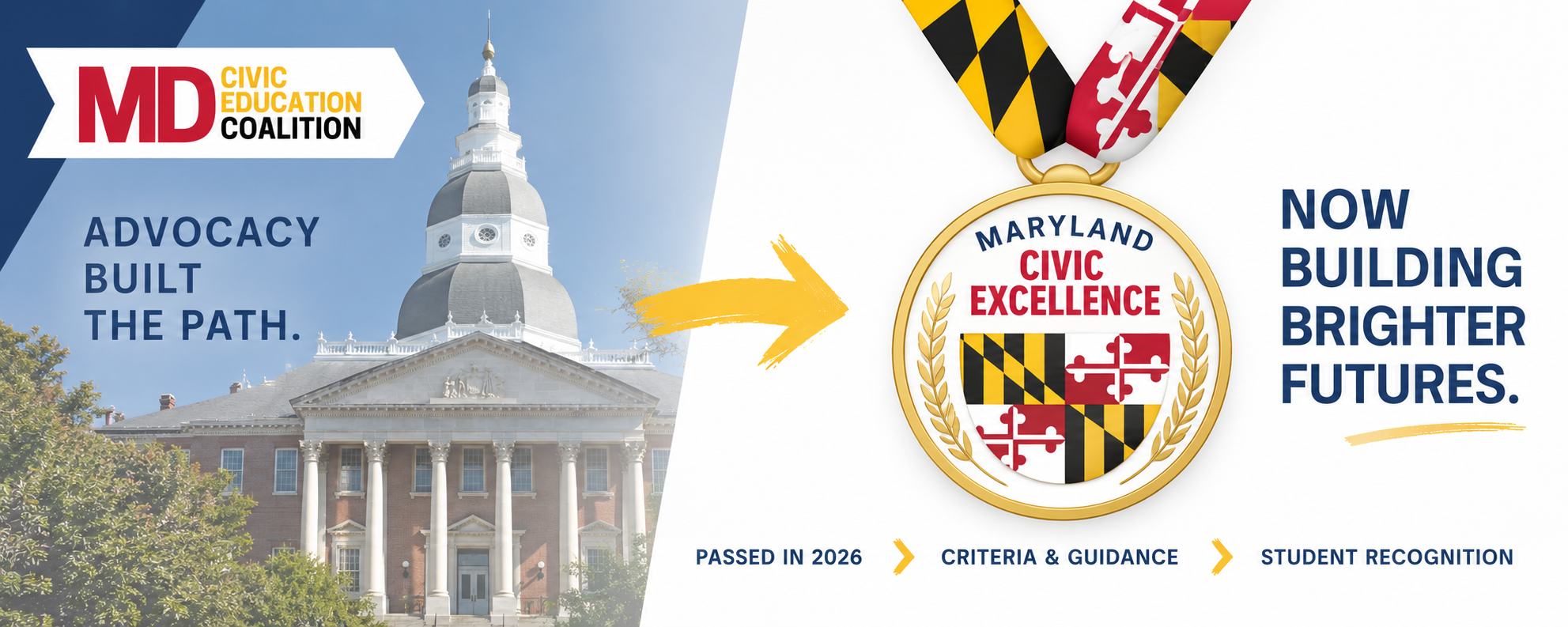
Maryland's Seal of Civic Excellence: From Advocacy to Implementation
For several years, MD-CEC worked with students, educators, civic organizations, and other partners to create statewide recognition for student civic learning and engagement. Together, we met with legislators, testified, shared research and experiences, and strengthened the proposal.
In 2026, Maryland passed SB 204/HB 57, establishing the Maryland Civic Excellence Program. The legislation passed the House 129–0 and was signed into law on May 26, 2026.
Now we're working with the Maryland State Department of Education and State Board of Education as they develop criteria and guidance for the Seal. Our goal is a program that is meaningful, rigorous, and accessible to students in every Maryland community.
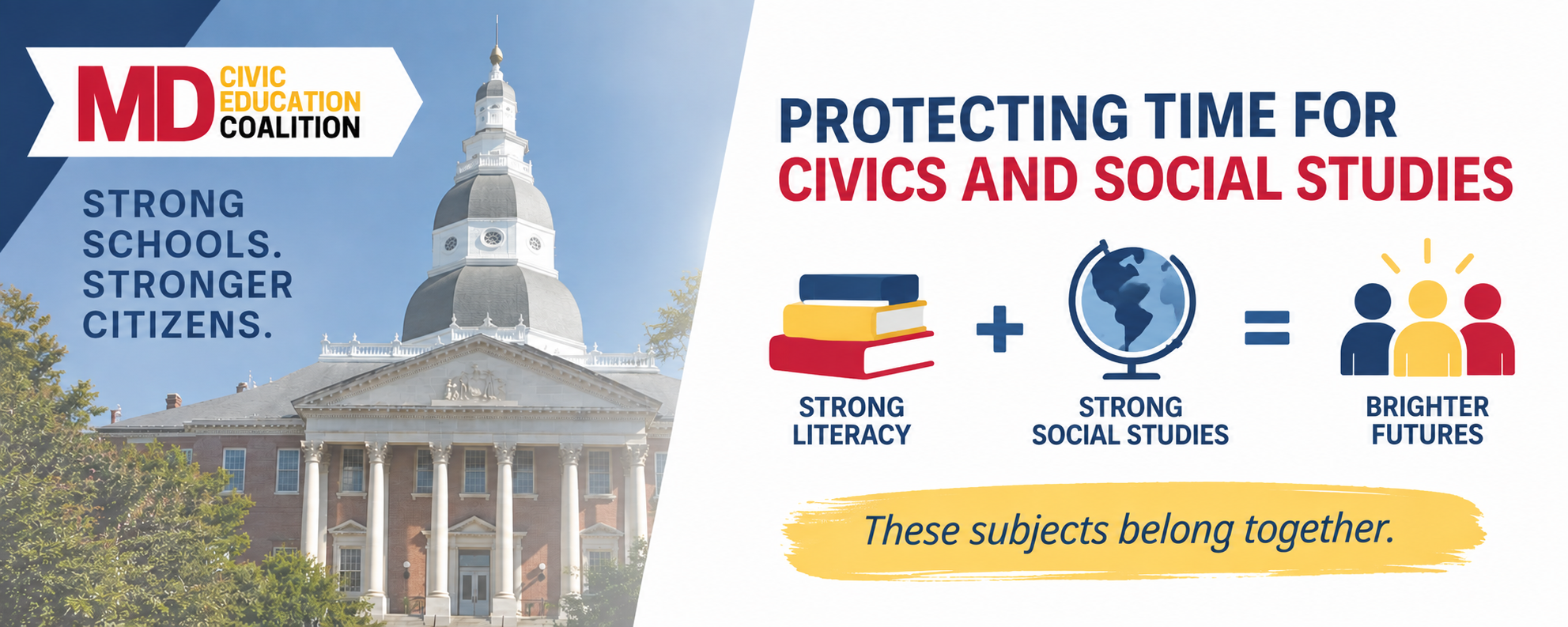
Protecting Time for Civics and Social Studies
Students need time to learn history, geography, economics, government, and civics.
As Maryland schools work to strengthen math and literacy, expanded instructional blocks can sometimes reduce time for social studies. We believe these subjects should strengthen one another, not compete for time.
Research shows that building knowledge supports reading comprehension. Social studies also gives students opportunities to read, write, discuss ideas, evaluate evidence, and think critically.
MD-CEC works with educators, partners, and state leaders to advocate for meaningful social studies instruction at every grade level.
Strong literacy and strong social studies belong together.
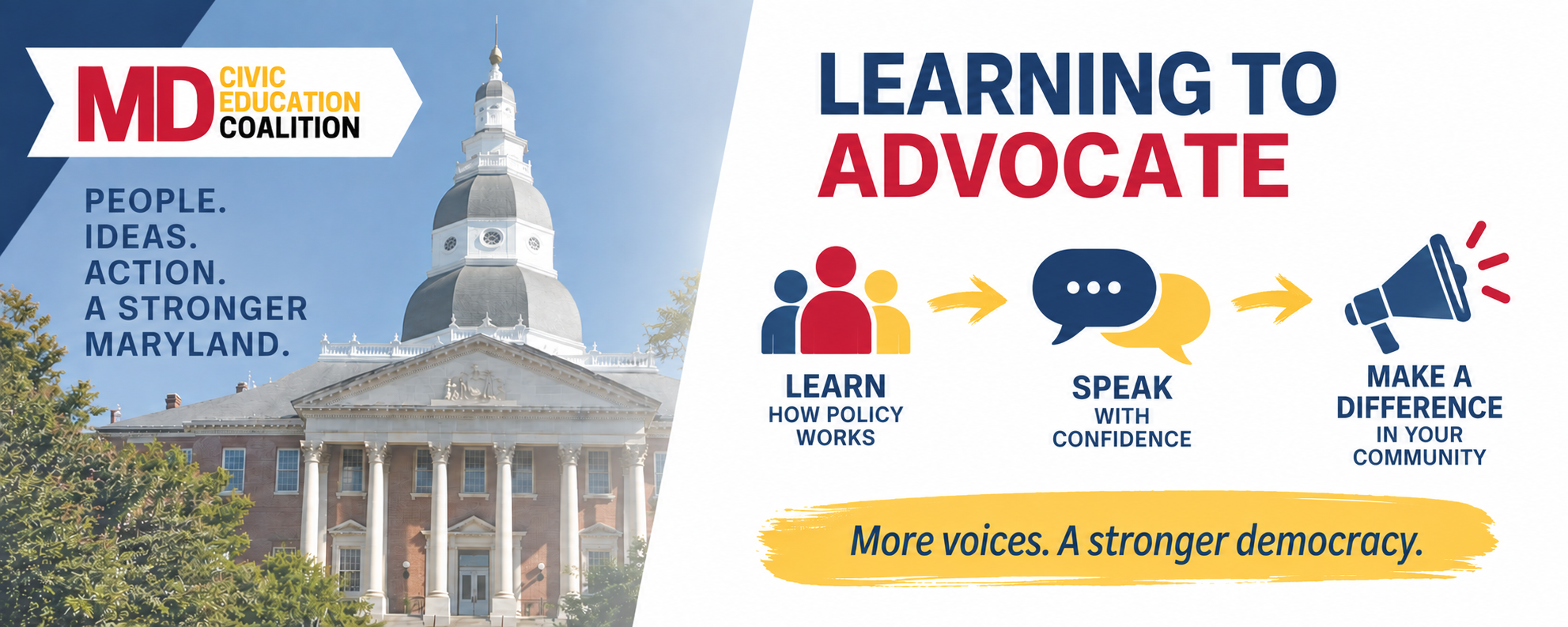
Learning to Advocate
Civic education isn't just learning how government works. It's learning how to participate.
Our intergenerational advocacy trainings on Zoom bring teens and adults together to learn about the legislative process, talk with elected officials, prepare testimony, use evidence and personal experience, and advocate effectively.
Participants then put those skills into practice through meetings with policymakers, testimony, advocacy days, and other opportunities.
We learn democracy by practicing it.
How We Advocate: We use research, position statements, testimony, public comments, meetings with policymakers and education leaders, coalition letters, student engagement, and partnerships to strengthen civic education across Maryland.
Our work is nonpartisan. We advocate for strong civic education, not candidates or political parties, and bring people with different perspectives together around the civic mission of education.
Join Us
Want to help strengthen civic learning in Maryland? Join the Maryland Civic Education Coalition for advocacy updates, trainings, conversations, and opportunities to participate.


